
The Psychology Behind the Honor System: Why It Actually Works
What behavioral science tells us about trust, honesty, and why most people pay — even when nobody is watching.
The most common question new vendors ask is: "Won't people just steal everything?" The short answer, backed by decades of behavioral research, is no. The vast majority of people pay honestly — and understanding why helps you design a stand that encourages even more honest behavior.
The Research Is Clear
Behavioral economists and psychologists have studied honor systems extensively. The findings are remarkably consistent:
- Studies on newspaper honor boxes (where you drop coins in a slot) found 85-95% payment compliance across different cities and income levels
- University dining hall experiments with unmonitored payment stations showed 90%+ compliance when the system was well-designed
- Farm stand operators across the US report 90-97% payment rates when best practices are followed
People are overwhelmingly honest — especially in environments that signal trust.
Why People Pay: The Science of Reciprocity
The principle of reciprocity is one of the most powerful forces in human behavior. When someone does something generous or trusting toward us, we feel a strong psychological compulsion to reciprocate.
An honor system stand communicates: "I trust you." That act of trust triggers a reciprocal response — "I should be worthy of that trust." This is why stands with personal touches (a farmer's photo, a handwritten note, a family story) have higher payment rates than anonymous ones. The more personal the trust feels, the stronger the reciprocal urge.
The "Being Watched" Effect
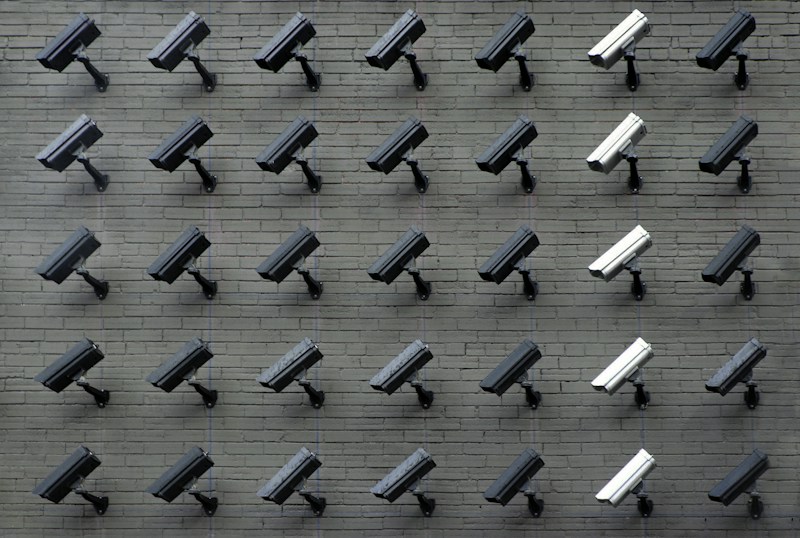
Research from Newcastle University found that simply placing an image of eyes near an honor box increased honest payment by 300%. This isn't about surveillance — it's about what psychologists call the audience effect. When people feel observed, even symbolically, they behave more in line with social norms.
Practical applications for your stand:
- A photo of you or your family near the payment area
- A visible (real or even non-functional) camera
- Positioning the stand where neighbors or passersby can see it
- Signs that reference the community: "Your honesty keeps this neighborhood stand running"
Social Norms and Signaling
People look to others' behavior to determine what's appropriate. This is called social proof. If your stand signals that paying is the norm, people will follow.
Effective signals:
- "Thank you for being one of 200+ honest customers this month"
- A visible tally or counter of satisfied customers
- Thank-you notes from previous customers pinned to the stand
- Clean, well-maintained displays that communicate "this is cared for"
The opposite also works — if a stand looks neglected, unattended, or chaotic, it signals that nobody is paying attention, which lowers the perceived social norm around honest payment.
The Friction Principle
Behavioral economists have shown that even tiny amounts of friction dramatically change behavior. Making it slightly harder to steal and slightly easier to pay shifts behavior significantly.
Reducing friction to pay:
- Multiple payment options (cash, QR codes, card reader)
- Round pricing ($3, $5, $10 — not $4.73)
- Pre-made bundles at fixed prices
- Clear, large price signs so there's no confusion
- Making change available
Adding friction to steal:
- Bolted-down cash box (even a simple one)
- Products visible from the road or from your home
- Daily inventory rotation (fresh stock signals active management)
- A guestbook or sign-in sheet (adds a sense of accountability)
The Identity Effect
Research shows people are more honest when their identity is engaged. An anonymous transaction has lower compliance than one where the person identifies themselves in any way.
This is why:
- Stands with a guestbook see higher payment rates
- Asking people to "sign our visitor board" increases honesty
- QR code payments (which are linked to a name) have near-100% compliance
- Loyalty cards or punch cards that track visits create accountability
You don't need to require identification. Simply creating an opportunity for people to self-identify is enough to trigger the effect.
When Dishonesty Happens: Understanding the 5%
The small percentage who don't pay honestly generally fall into predictable categories:
- Genuinely forgot cash and didn't see digital options — Solved by prominent QR code signage
- Misunderstood the system — Solved by clear signage explaining how payment works
- Took more than they paid for — Solved by pre-portioned items with clear per-unit pricing
- Intentional non-payment — A small minority; deterred by visibility, cameras, and community signaling
Most "theft" at honesty stands is actually confusion, not malice. A customer who takes a $5 bag of tomatoes and leaves $3 may not be stealing — they may have misread the price sign or grabbed the wrong item.
Designing for Honesty
Based on all of this research, the optimal stand setup for maximum honest payment includes:
- 1A personal element — Your photo, name, and a sentence about your story
- 2Clear, unavoidable pricing — Large signs, simple numbers, per-item labels
- 3Multiple easy payment options — Cash box + at least two QR code options
- 4Social proof — Thank-you notes, customer count, community references
- 5Symbolic observation — A visible camera, eye-level photos, or positioning with natural foot traffic
- 6Regular maintenance — A cared-for stand signals active management
- 7Gratitude messaging — "Thank you for your honesty" rather than "You are being watched"
The Bigger Picture
Running an honor system stand isn't naive — it's an evidence-based approach to commerce that works because it aligns with fundamental human psychology. People want to be honest. They want to support their neighbors. They want to be part of something good.
Your job as a vendor isn't to prevent theft. It's to create an environment where honesty is easy, natural, and rewarding. The research says that when you do, the overwhelming majority of people will meet you there.
Found this helpful?
Share it with your community